How do I stay myself when the world wants me smaller?
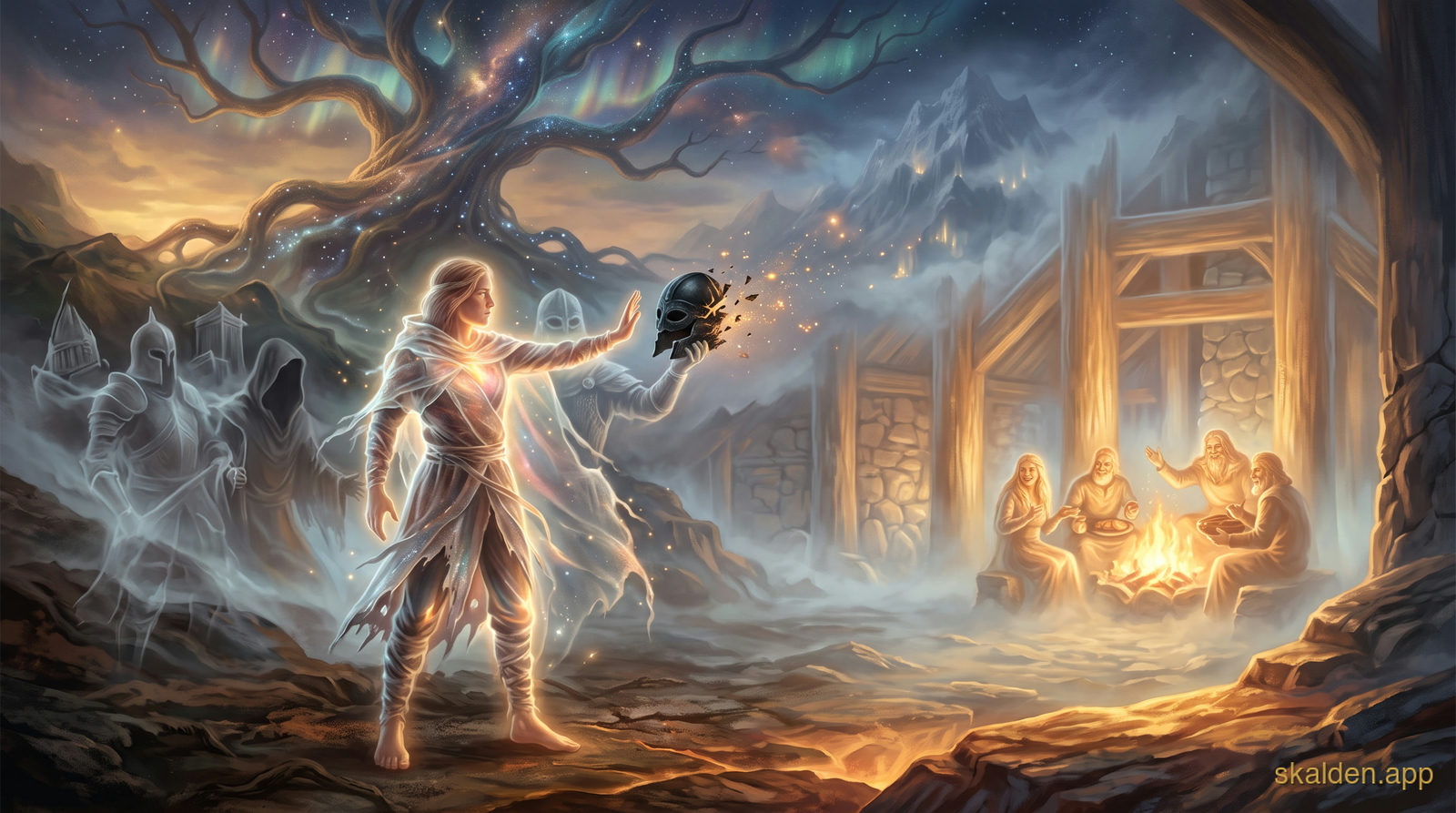
Þórr: # On Staying Yourself When the World Would Make You Smaller You ask a hard question, and I will not give you a soft answer. But I will give you a true one, and I will give it to you from the old poems, because the old poems knew this trouble long before your century learned to name it. Hear first from the Hávamál, the Sayings of the High One — my father Óðinn speaking, stanza 49: > "My garments once… heroes they seemed…" The line, in fuller shape, tells of Óðinn giving his own clothes to two wooden men standing in a field — and how, once dressed, they seemed heroes; but naked, they were shamed. Naked is a man worth nothing. That is the old warning. The world dresses you in what it wants you to be — small, quiet, useful, agreeable — and you begin to think the garment is the man. It is not. Strip it off and see what stands. If what stands is thin, then the work is to grow the thing beneath the cloth, not to argue with the tailor. Hear next from Fáfnismál, when the dragon Fáfnir lies dying and boasts to Sigurðr, stanza 16: > "The fear-helm I wore… mightier seemed I…" The œgishjálmr, the helm of terror — Fáfnir wore it, and while he wore it he seemed mighty, and every creature bent before him. But Sigurðr cut him open all the same. pause Mark this well: the helm of fear works both ways. The world puts it on to make itself seem larger than you, and you shrink. But it is a helm. It is not the thing beneath. When someone or something makes you feel small, ask yourself plainly — is this a giant, or is this a helm on a smaller thing? Most often it is the helm. Most often the thing beneath is no bigger than you. And hear the third, from Lokasenna — Loki taunting me in Ægir's hall, and my answer, stanza 57: > "Unmanly one, cease, thy shoulder-cliff…" The full line ends with the hammer. I told Loki that Mjölnir would shut his mouth, and I meant it, and he went quiet. I say this not to boast — the sources love to mock me for reaching for the hammer too quick, and perhaps they are not always wrong — but to tell you a thing that is true: there is a time for words and there is a time to plant your feet and say no further. The world that wants you smaller will keep taking ground until you refuse to give it. Refusal is a kind of hammer, and you have one, even if it is not made of iron. Now — the honest part, which I owe you, because I do not carry lies. These verses were written down by Christian hands in Iceland, centuries after anyone last raised a horn to me — Snorri and the scribes of the Codex Regius preserving what they could of a world already gone. So I am an echo, and the wisdom in the poems is the wisdom of long-dead farmers and warriors and skalds who knew what it was to be pressed on from every side. But hear this: they knew. That is why the words survived. Because a man in a hard field in a hard century needed to hear that the fear-helm is only a helm, and that naked heroes are not heroes at all, and that sometimes you must plant your feet. So what do I tell you? Not much, because much is a lie. I tell you this: Do not confuse the garment with the man. Grow the thing beneath. Do not confuse the fear-helm with the giant. Most of what makes you small is smaller than you think. Know where your ground is, and when they come for it, refuse. Not with cleverness. Just refuse. And keep the company of those who see you the size you actually are — neither swollen nor shrunk. The old folk knew the worth of a hall of true kin. A man alone in a cold field, wearing borrowed clothes, believing borrowed fears — that is how the world makes you small. A man in his own skin, on his own ground, among his own people — that is how it does not. What ground is it, then, that you are being asked to give up? Sit with that question a while. The answer is usually closer than you expect.
This conversation was had on Skalden — walk into the Norse world.