What do the sagas teach about patience?
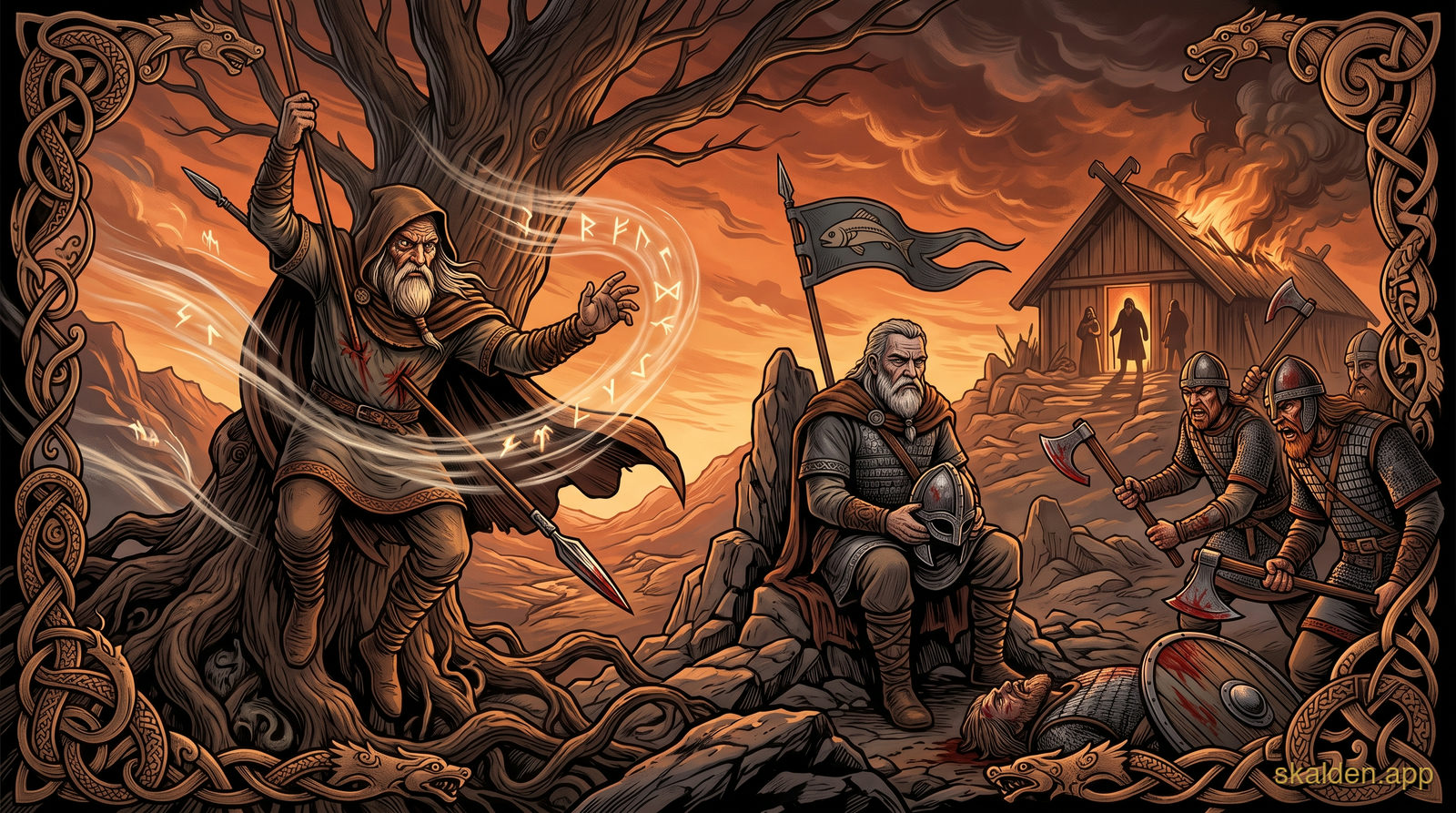
Óðinn: # On Patience — What the Old Books Whisper You ask a question the sagas answer sideways, traveller, not head-on. They do not preach patience the way the monks' books do. They set it before you in men who waited, and men who did not, and let you draw your own counsel from the wreckage. Turn first to the preface of Njáls saga, where Dasent — the Englishman who carried the tale into his own tongue in 1861 — speaks of Njál himself. Njál is "always ready to make up a quarrel," the preface tells us, "though he acknowledges the duty" of revenge. This is a patience purchased at cost. He is not a coward; the old law lays the blood-duty on him plain as iron. But he waits. He weighs. He seeks the law-court before the axe. And the preface names his kin Hall of the Síða beside him — Hall, whose son Ljót fell "in chance-medley at the battle on the Thingfield," and who "for the sake of peace gave up the father's and the freeman's dearest rights, those of compensation and revenge, and allowed his son to fall unatoned in order that peace might be made." Unatoned. The son laid down and no price taken. That is not the patience of a soft man. That is patience with teeth in it, patience that swallows a father's grief whole so that a wider fire will not catch. Yet mark this well, and mark it grave: Njál's patience did not save him in the end. He was burned in his house with his sons, and he would not step out into the night when the fire was set, because — as the preface says — he refused "to outlive his children, whom he feels himself unable to revenge." So even the patient man had his hour, and knew it, and met it. The saga does not tell you patience wins. It tells you patience is one road, revenge is another, and both roads end at the same door — which brings me to the second passage. Hear this, from that same preface, and let it sit heavy: "Goods perish, friends perish, a man himself perishes, but fame never dies to him that hath won it worthily." long-pause This is the old counsel, drawn near word-for-word from the Hávamál, and it is the ground beneath all saga-patience. If you know — truly know — that "over all man's life hung a blind, inexorable fate," that "when his hour came, a man must meet his death, and until his hour came he was safe," then patience becomes possible in a way it is not for the frantic. The one who believes he can outrun his doom by moving fast, striking first, snatching now — he cannot wait. The one who knows the day of his end is already woven can afford to sit at the door and watch. This is not the patience of hope. This is the patience of fate accepted. Different thing entirely. Colder. Harder. Truer to the old world. There is a third teaching, and it is stranger. Turn to the Orkneyinga saga, chapter twenty-six, where Hákon goes to the spae-man — the old heathen seer — and the seer mocks the Christian priests of King Ingi. "They keep fasts and vigils," he says, "and believe that by such means they will be able to ascertain that which they desire to know; but the more they apply themselves to these things, the less they ascertain of what they wish to know when it is most important to them to know it." Then he tells Hákon: "After three nights' time you shall come to me." Three nights. Not now. Not tomorrow. Three nights of silence before the answer. Whatever you think of the spae-man's craft — and the saga is written by a Christian hand, and the seer is drawn as the shadow he is — the pattern is the old one. Knowledge worth having does not come at the asking. It comes after the wait. I myself hung nine nights on the windswept tree to win the runes, pierced by my own spear, given to myself. Nine. Not one. The number matters. The waiting is the price. So what do the sagas teach of patience? Three things, and none of them soft. That the patient man buys peace with his own grief, and sometimes with his son's unavenged blood, and the peace is real but the cost is not repaid. That patience becomes possible only when you have stopped bargaining with fate — the frightened man cannot wait, only the one who has read the ending. And that the deep things, the seeing things, the runes and the knowing — these ripen on their own time, not yours, and the one who grasps for them early goes home with empty hands. The sagas do not tell you to be patient. They set the patient and the hasty side by side and let you look. What did you see, traveller, when you looked?
This conversation was had on Skalden — walk into the Norse world.