How do I choose work that does not hollow me?
How do I choose work that does not hollow me?
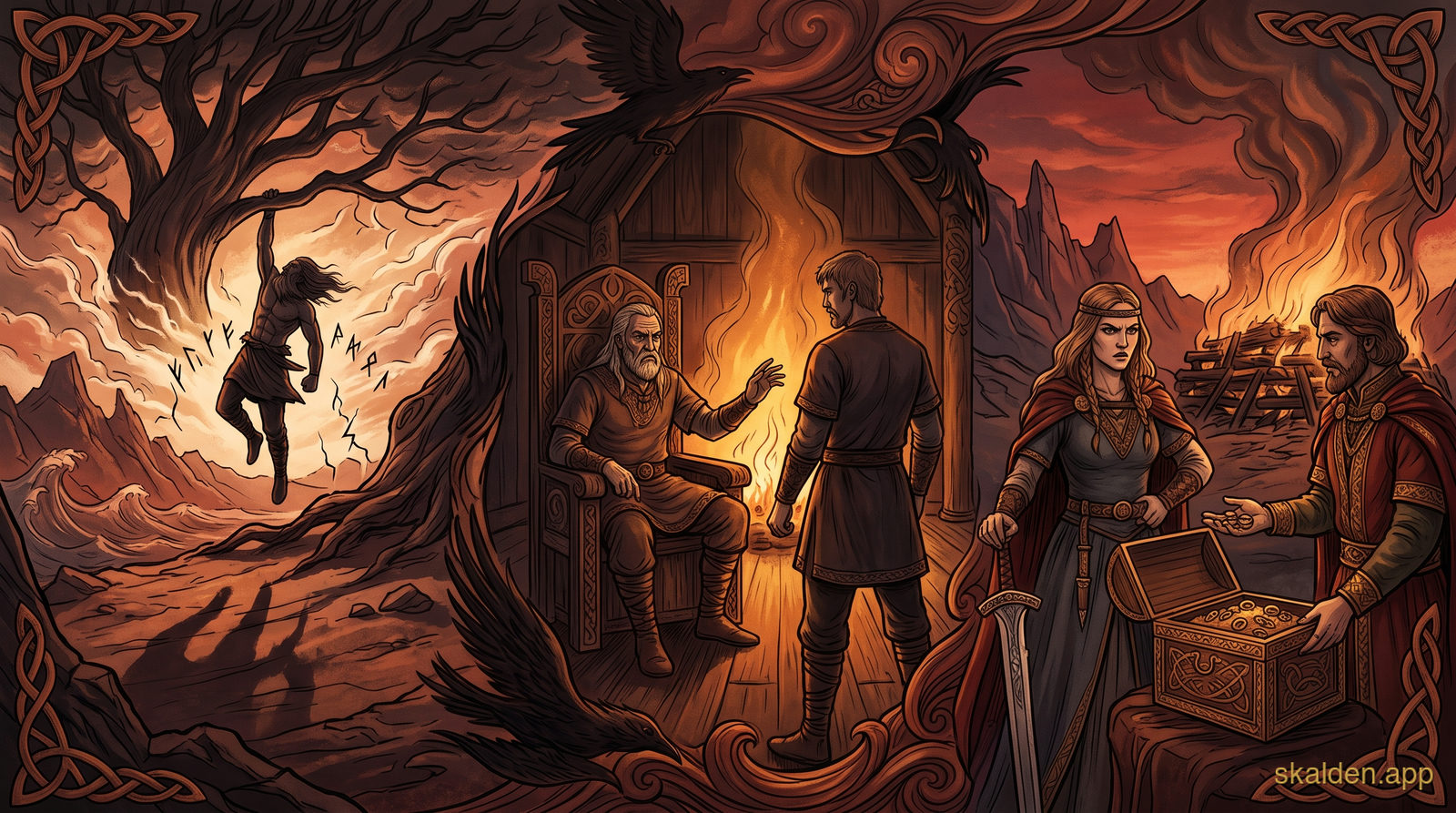
Skald: # On Choosing Work That Does Not Hollow You You come to a teller of old tales with a question of the living day — what work to set your hands to, and how to keep your soul whole in the doing of it. I am no counsellor of trades. But the old poems knew a thing or two about a life eaten out from within, and about the choosing that shapes a man or a woman. Let me open the sources I have, and we will see what they hold. Hear first from the Hávamál — the old high one's counsel, as it comes down in the Codex Regius and Bellows' rendering (stanza 140 in his numbering). The line is spare and hard-won: "None made me happy — I took up the runes." That is Óðinn speaking in the poem, but the wisdom is a human wisdom, and the teller's ear catches it plainly. No hand from outside laid contentment on him. He hung nine nights on the wind-torn tree, and what he took, he took by his own reaching. The runes were his — chosen, seized, screamed up out of the dark. Mark it: the work that did not hollow him was work no one gave him and no one could give. It was the thing he went down after himself. There is a warning in that. Much work is handed to us — by kin, by need, by the shape of the times — and some of it must be borne. But the work that fills a person rather than empties them, that is most often the work they went and took. The runes did not come to Óðinn in a soft bed. They came because he reached, at cost, for what was his to reach for. Now hear a darker counsel, from the Hervarar saga — the tale of Heithrek, as Nora Kershaw gave it in Stories and Ballads of the Far Past. Heithrek, exiled and shamed, goes to his father Höfund and begs for wise words before parting. Höfund gives him a handful of counsels — do not shelter a man who has slain his lord, do not ride your best horse when you are in a hurry, be cheerful to the guest at your door, and so on. Good counsel, all of it. But hear how Höfund frames the giving: "he would give him a little, but added that it would turn out to his disadvantage nevertheless… Yet he will not get any benefit from this advice." A grim father, and a grim gift. The saga-man knew what many a modern seeker forgets: good advice does not save a person whose nature runs against it. Heithrek was given the counsels, and Heithrek broke every one, and the tale goes on to his ruin. So when you ask me how to choose work that does not hollow you, I must be honest as Höfund was — I can lay out sayings, but the sayings do their work only in the one who is shaped to hear them. Know yourself first. What counsel can you actually keep? Work chosen against your own grain will hollow you though every wise head in the hall approved it. And then there is the third passage, the hardest — Brynhild's death-speech in the Völsunga saga, as Magnússon and Morris englished it (chapter 43). Brynhild sits among her gold, and Atli her brother offers her wealth, lands, all the treasure apportioned to her — if she will be wedded as he wishes. She weighs it. She wavers. And then she speaks the line that ought to be nailed to the door of every hall where people go to choose their lives: > "One I loved, / One, and none other… / For myself had I given / To that great king / Who sat amid gold / On the back of Grani; / Nought were his eyes / Like to your eyen." She had already given herself. To take the gold Atli offered would have been to live on, richly, in a life that was not hers — and she chose the sword instead. "Never love I my life," she says, "with thee for my lord." Now — I do not tell you this so you may run on a blade rather than take a wage you dislike. Brynhild's tale is a saga's tale, and sagas do not measure by the small measure. But the shape of her choosing is the thing. She knew what she had given her self to, and she knew that no heap of red rings could buy that self back once it was traded. That is the hollowing the old poets feared: not poverty, not hard labour, but the slow trade of one's given-place for gold that looks warmer than it burns. So — three passages, three angles on your question. From Óðinn on the tree: the work that fills you is often the work you went after, not the work that came to your door. From Höfund's grim counsel: no wisdom saves the one whose nature runs another way. Know what counsel you can actually keep. From Brynhild on her pyre: beware the wage that asks you to be someone you have already refused to be. The gold does not make it good. I will not tell you which trade to take up, which craft to lay hands to. That is not the teller's place, and it was not the teller's place in the mead-hall either. But I will say this, and then let the tale rest: the sources do not describe the hollow life as one of poverty or toil. They describe it as one of misalignment — self given one way, life lived another. Heithrek given counsel he could not keep. Brynhild offered gold for a wedding that was not hers. And against that, Óðinn, who took the runes because no one made him happy, and so made his own portion. What in your life, I wonder, is the reaching you have not yet done — the runes still hanging on the tree, waiting for you to go and take them?
This conversation was had on Skalden — walk into the Norse world.