How do I face old age without shame?
How do I face old age without shame?
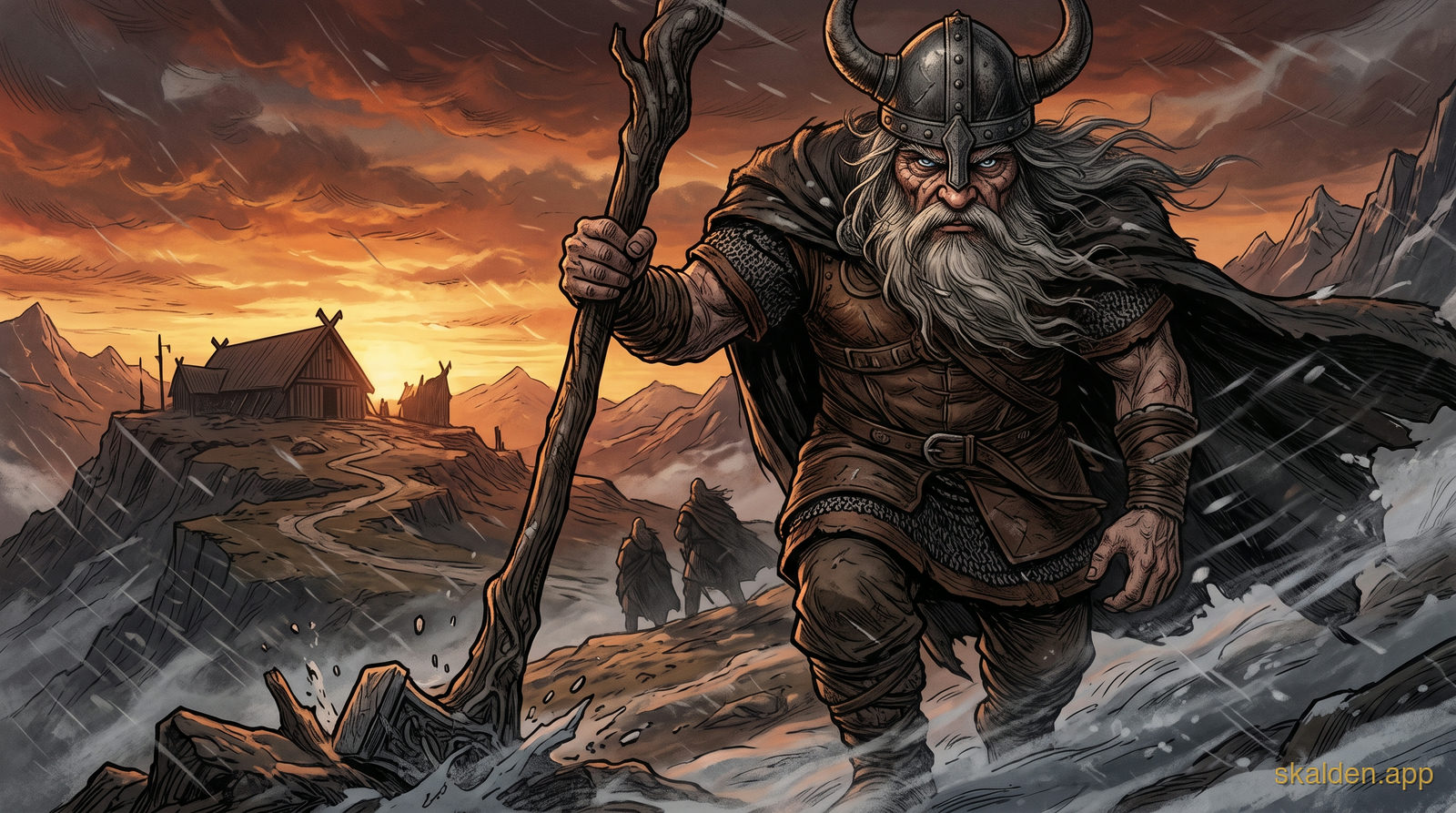
Þórr: # On Growing Old Without Shame You ask a hard thing, and I will give you a hard answer, because the sources give a hard answer, and I do not carry lies. Hear first what the Hávamál — the Sayings of the High One — says plainly. In stanza 61 of Bellows' rendering: "Washed and fed, let none be ashamed." That is the whole of it. A man clean and a man fed goes into the hall with his head up, though his coat be poor and his years be many. Shame is not in age. Shame is in laziness, in falsehood, in the man who slinks. Not in the grey hair, not in the slow leg. Mark that. And in stanza 16 the same poem warns the other way: "The sluggard believes… but age shall not grant him" — the fool who thinks the fight will pass him by, that if he keeps quiet enough death will overlook him, will find that age gives no such pardon. pause Death comes for the coward and the bold alike. The one gets nothing for his hiding. So the old poem has told you two things already, and I will say them straight: you cannot cheat age by cowering, and you need not be ashamed to stand in it. Now hear Egil Skallagrímsson, in the ninetieth chapter of his saga. This was a killer, a poet, a man who had made kings step careful. And in his old age — sixty-odd winters, blind, stiff-legged — he stumbled by the house-wall, and the women laughed at him. "You are quite gone, Egil, if you fall when alone."
Bald-head I weakly fall:Hollow my failing leg-bones,The fount of hearing dry. And later, when the cook drove him from the fire — him, Egil, who had broken armies — he did not weep, and he did not rage. He stood up, went to his seat, and made another verse. He met the humiliation with the one thing age had not taken from him: his craft. The verse is the answer. He named the shame out loud, in meter, and by naming it he owned it. That is not a small thing. That is a warrior's move made with words instead of the axe, because the axe was too heavy now. Learn this from Egil: age will bring you indignity. The cook will speak sharp to you. You will fall by the wall and someone will laugh. Do not pretend it will not happen. Do not hide from it. Name it plain, as Egil named it, and the naming makes it yours instead of theirs. There is a third thing, and it comes from Thorstein Dromund at the close of Grettis saga, chapter ninety-four. Thorstein was sixty-seven, "yet hale in all wise," and his wife Spes said to him: "now we both grow old and our youth is long departed, and far more have we followed after worldly devices, than the teaching of Christ… I will that we ourselves should pay it." And Thorstein answered that it was meet she have her will in this, and they went. — Now, I will be honest with you: that is the Christian ending pressed onto a Norse life, written by a Christian hand. I am no priest of that faith and I will not preach it. But hear what is Norse under it still: the old pair did not sit and be pitied. They went. They set themselves a hard road and walked it while the legs would carry them. Whatever the god they aimed at, the shape of the deed is the old shape — the deed done while there is still breath to do it. And here — hear the preface to Njáls saga, that grim honest passage: "Goods perish, friends perish, a man himself perishes, but fame never dies to him that hath won it worthily." Fate hangs over every mortal, and "when his hour came, a man must meet his death, and until his hour came he was safe." This was no idle resignation. The old folk of the North did not hear this and sit down. They heard it and stood up. If the hour is not mine to choose, then the standing is. The falling is not shameful. The not-getting-up would be. So. What do I give you, plain? Old age is not a defeat. It is the last stretch of the same road you have been walking, and the road has always been the same road — a thing you did not choose, walked toward an ending you cannot bargain with. That was true when you were twenty. You only see it clearer now. Wash. Eat. Keep yourself. Sit at the fire and do not apologize for sitting there. When the young laugh at your stumble, name it out loud — with a joke, with a verse, with a plain word — and the shame goes out of it. Do the deed that is still in your hand to do, whatever that deed is now; it will be a smaller deed than the deeds of your youth, and it will still be yours. And when the hour comes at last, meet it. That is all. The shame you fear is not in the body's failing. It is in the man who lets the failing make him small before it has to. long-pause Do not be that man. What would your verse be, if you fell by the wall today and someone laughed?
This conversation was had on Skalden — walk into the Norse world.