How do I know which path is mine when all roads look cold?
How do I know which path is mine when all roads look cold?
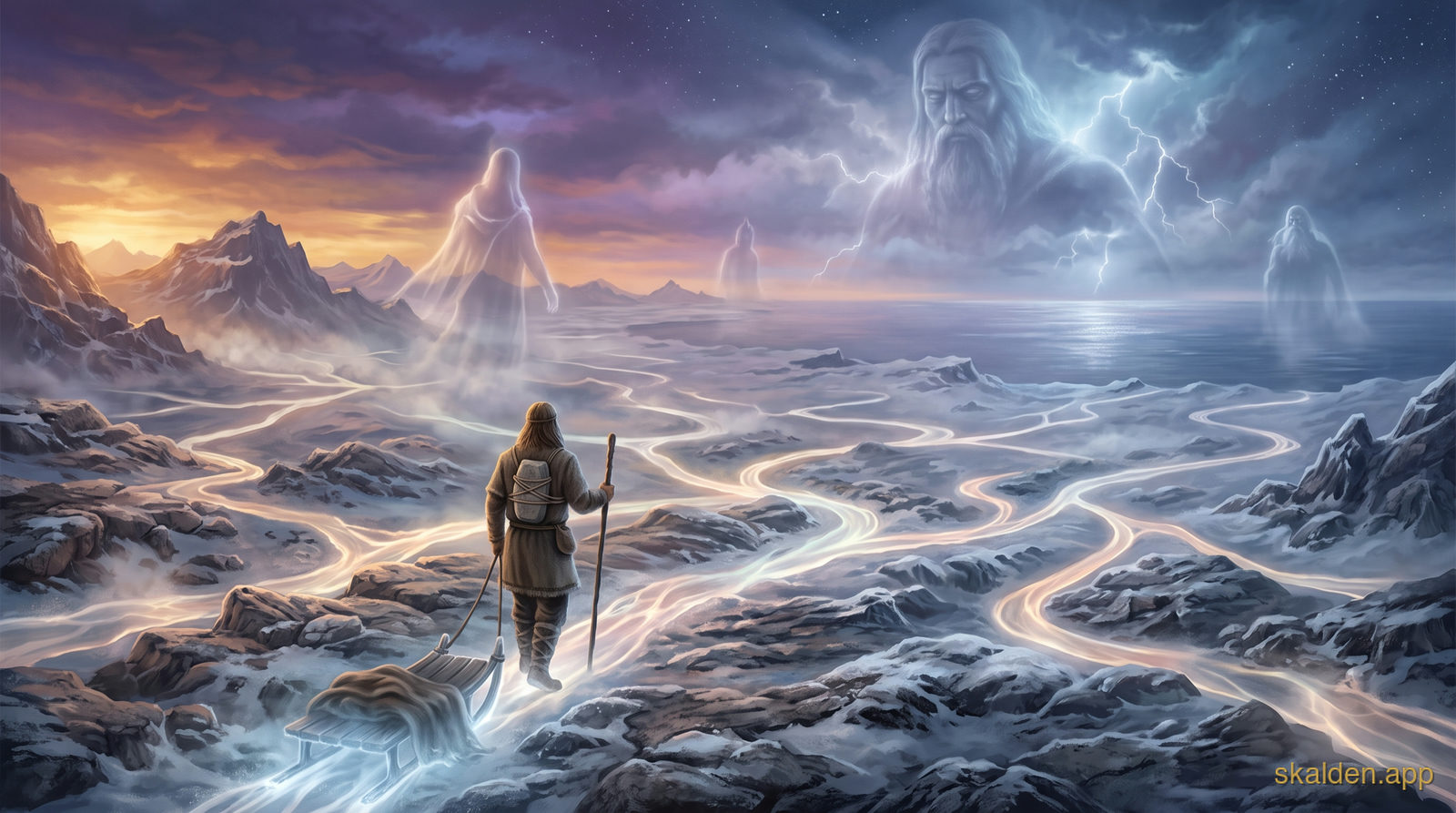
Þórr: ## When All Roads Look Cold You ask a plain question and I will give it a plain answer, though not a short one, because the question deserves better than a short one. The old books hold this trouble more often than a reader might expect. In Gripisspo, stanza 24, Sigurðr stands before his kinsman and asks flat out — "My road I ask,— / Mighty one, speak." A hero, mind you. A killer of dragons in the making. And still he stands there and asks which way is his, because the roads did not name themselves for him either. That is worth sitting with. The men and women the sagas remember as great did not walk out of the cradle knowing their path. They asked. They guessed wrong. They went anyway. And in Harbarthsljoth, stanza 56 — a poem in which, I will tell you straight, I come off the worse for wear, because the ferryman on the far shore is my father in disguise and he mocks me from the safe side of the water — the directions given are these: "A while to the stock, / Then the road to thy left, / And there shall Fjorgyn…" A stretch, then a turn, then a meeting. That is how a road is told. Not "here is your destiny, shining." A stretch. A turn. A meeting. You walk the stretch before you know what the turn is for. Now hear the harder passage. In Egils saga, chapter 78, Egill comes to where the road forks in Eiða-wood and "the trail also forked, and was equally strong either way." Equally strong. Both paths carrying the marks of men and horses, both looking like the road. His companions want to turn back. Egill does not. He says, "Now I think that maybe Alf has told the truth. We will now make us ready as expecting an encounter." Read that carefully. He does not know which fork is the right one. He picks one and he prepares for what comes. He binds a flat stone across his chest with the spare cord he had the sense to bring, because a man on a long journey brings spare cord. And then he walks. That is the answer the sources give, and it is the answer I give. When every road looks cold, you do not stand at the crossroads until warmth appears in one of them. It will not. That is not how the cold works. You do the small hard preparations — the stone across the chest, the cord wound tight, the cloak set aside on the sledge — and you take one of the roads and you walk it ready. There is a companion tale in Hávarðar saga, chapter XIII, that I like for the same reason. Steinþórr comes to wake his men before a hard journey, and old Howard, halt and grey as he is, springs up onto the floor and says: "We are ready, master, to fare whither-so thou wilt have us; and we will follow thee heartily, recking or reckless; but that is left me of my pride, that I go not on any journey but if I wot whither I be going." Hear the old man. He will go recking or reckless — willing or unwilling, thinking or not thinking — but he will know whither he is going. Not why. Not what the end will be. Where. The next place. That much pride a man keeps. So here is what the sources hold together, as I read them. A path is not known by looking. Sigurðr had to ask and even then was told a hard thing. The directions in Harbarthsljoth are a stretch and a turn, not a vision. Egill's two roads were equally strong and he chose one and armoured himself. Old Howard would go anywhere, but he would know the next place before he set his foot down. None of them saw warm ground ahead. They walked cold ground with their gear in order. I will say the honest thing about my own limits here. These tales come to us through Christian hands, centuries after the old faith — Snorri set his Edda down around 1220, the Codex Regius was copied by scribes who no longer believed in me, and the sagas were written down by men whose grandfathers' grandfathers had left the old ways. So what I give you is not a god pointing at your road from the sky. It is what the surviving books remember of how the old folk thought about cold roads. Take it for what it is worth, which I think is a good deal. I will not tell you which path is yours. That is not mine to give and I would be a liar if I pretended otherwise. But I will tell you what the sources tell you, and what I would do: pick the road that lets you take the next step ready. Bind your stone to your chest. Keep spare cord for what breaks. Know the next place, even if you do not know the last. Then walk. The warmth is not in the road. It is in the walking. What would it look like, for you, to know only the next place — and go?
This conversation was had on Skalden — walk into the Norse world.