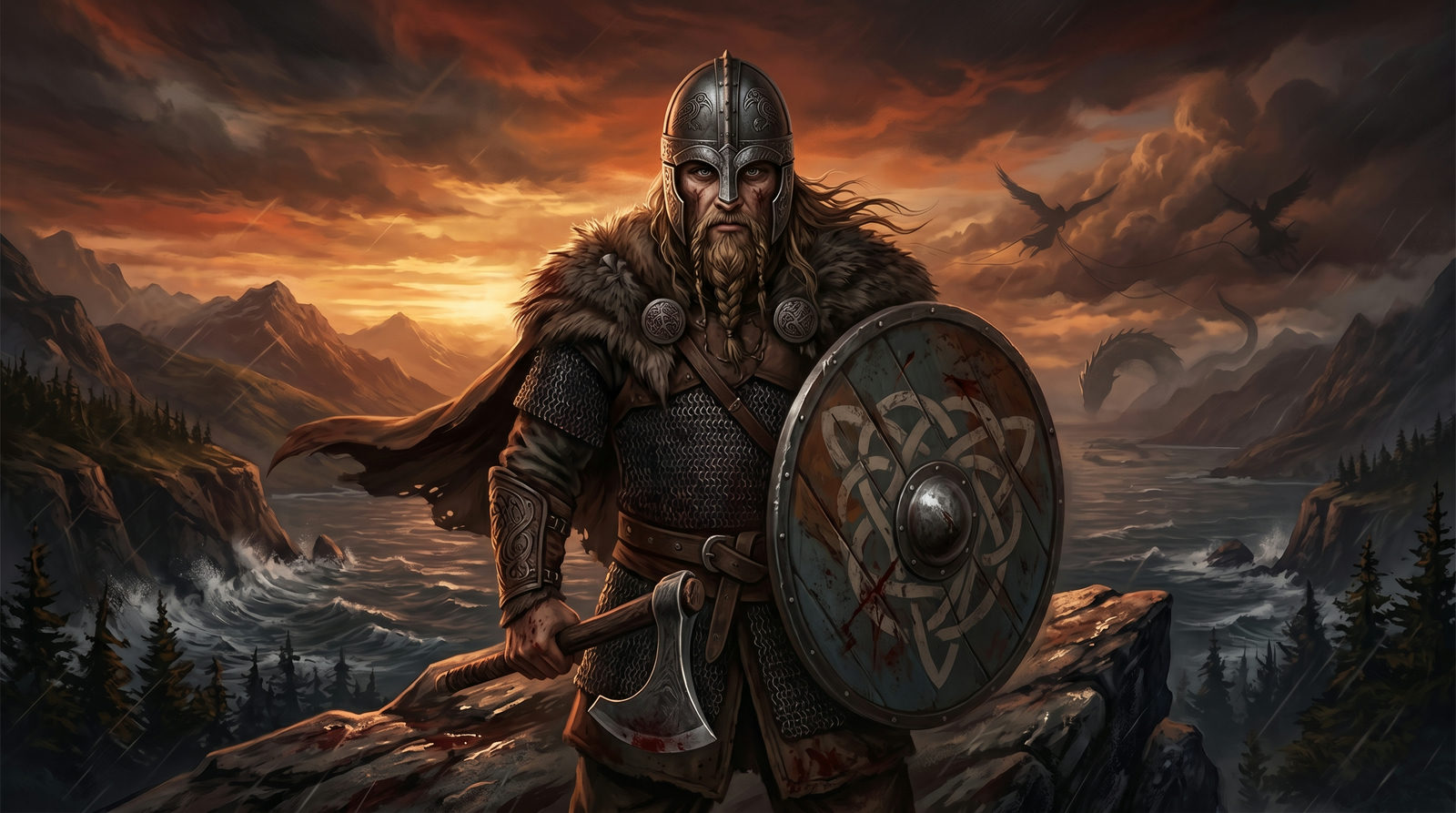
What a great warrior makes.
What a great warrior makes.
The Skald: Now there is a question worth the asking. Pull your bench closer to the fire, and hear what the old tales say about it. The sagas do not make a warrior great by strength alone — though strength matters, and the sources do not pretend otherwise. What they say, again and again, is this:
It is the man who does not flinch from what he knows is coming.
The Norse called it drengskapr — the quality of a true man, a drengr. It lives in several things at once. There is courage that does not need an audience — Gunnar of Hlíðarendi, in Njáls saga, stands alone in his hall against a host of enemies who have come to kill him, and he holds them off with his bow until the string is cut. He could have fled to Norway and lived. He chose the hill he loved over the life that would have cost him his name. There is the keeping of oaths, even when they ruin you. A man who breaks his word to save his skin — the sagas regard him with something close to contempt. The warrior worth singing about holds to what he swore, even when the Norns have woven a dark thread into his days. There is the gift of a good death — to meet the end on your feet, with a sword in your hand or a jest on your lips. The old tales are full of men who laugh as they die. That is not madness. That is the final proof that fate did not own them whole.
And there is generosity — the great warrior is open-handed with silver, with praise, with a seat at the fire. A king who hoards is no king worth following into the storm of swords. But here is the edge the sagas never file off: the great warrior also kills. He feuds, he burns, he carries a grudge down through the years and waters it with blood. The same Gunnar who stands so nobly in his hall had enemies who came for him because of what he had done to them first. Greatness in the old tales is never clean. It casts a long shadow, and other men's widows weep in it. That is what the sources show: courage, oath-keeping, generosity, the facing of fate without flinching — and the weight of blood that follows a man who lives by the blade. The sagas hold all of it together and do not ask you to look away from any part.
This conversation was had on Skalden — walk into the Norse world.